Thursday, November 10, 2011

SCOOT Exhaust


LeoVince provides a wide range of Scoot bolt-on and slip-on systems for many popular scooter models. From the inexpensive TT,to the hard-core ZX and HM70, to the all-around 4Road and Touring series, Scoot has a system for every need.

TOURING Quiet performance for long distance and commuting.

ZX Top systems for two-stroke performance available in either 5 stage chrome or clear coat.

TT Value-priced scooter performance.

4-ROAD Four-stroke performance for today's larger scooters.

HM70 High-performance for modified 70cc scooters.
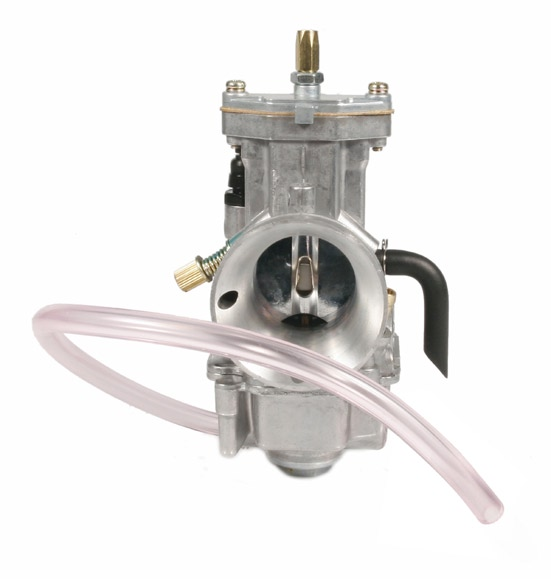


KOSO - Racing Carburator


KOSO-Racing Carburetor built on Keihin basis. This carburetor is remarkable through it‘s small
construction, chromed slide valve and CNC milled intake path. Delivery includes rubber connector and two main and secondary jets. For exact tuning, we recommend a complete main and secondary jet tuning set. Not only is this well made, it‘s price is unbeatable and is a price worthy alternative to MIKUNI carburetors.

Beside of the very nice workmanship, the price is unbeatable. A very attractive alternative to MIKUNI carbs.


Monday, October 24, 2011

Tribute to Marco Simoncelli


we would like to condole the death of Marco Simoncelli which occurred on 23 October 2011 Sepang circuit in Malaysia.

Marco was one of the most popular riders at the MotoGP event at Indianapolis, as his talent on the motorcycle and his ability to connect with fans both were very special. We extend our sincere sympathies to his family, team and fans

Long time friend Valentino Rossi refrained from earlier media interviews, to later publish via his Twitter account: "Sic for me was like a youngest brother. So strong on track and so sweet in the normal life. I will miss him a lot."

Wednesday, September 28, 2011

What On 23 April 1946


Glove box on newer Vespa PX
On 23 April 1946, at 12 o'clock in the central office for inventions, models and makes of the Ministry of Industry and Commerce in Florence, Piaggio e C. S.p.A. took out a patent for a "motorcycle of a rational complexity of organs and elements combined with a frame with mudguards and a casing covering the whole mechanical part".[5]
The basic patented design allowed a series of features to be deployed on the spar-frame which would later allow quick development of new models. The original Vespa featured a rear pillion seat for a passenger, or optionally a storage compartment. The original front protection "shield" was a flat piece of aero metal; later this developed in to a twin skin to allow additional storage behind the front shield, similar to the glove compartment in a car. The fuel cap was located underneath the (hinged) seat, which saved the cost of an additional lock on the fuel cap or need for additional metal work on the smooth skin.
The scooter had rigid rear suspension and small 8-inch (200 mm) wheels that allowed a compact design and plenty of room for the rider's legs. The Vespa's enclosed, horizontally-mounted two-stroke 98 cc engine acted directly on the rear drive wheel through a three-speed transmission. The twistgrip-controlled gear change involved a system of rods. The early engine had no cooling, but fan blades were soon attached to the flywheel (otherwise known as the magneto, which houses the points and generates electricity for the bike and for the engine's spark) to push air over the cylinder's cooling fins. The modern Vespa engine is still cooled this way. The mixture of two-stroke oil in the fuel produced high amounts of smoke, and the engine made a high buzzing sound like a wasp.[citation needed]
The MP6 prototype had large grilles on the front and rear of the rear fender covering the engine. This was done to allow air in to cool the engine, as the prototype did not have fan cooling. A cooling fan similar to that used on the MP5 "Paperino" prototype was included in the design of the production Vespa, and the grilles were removed from the fender.[2]


Design by Free WordPress Themes | Bloggerized by Lasantha - Premium Blogger Themes | Best Buy Coupons